
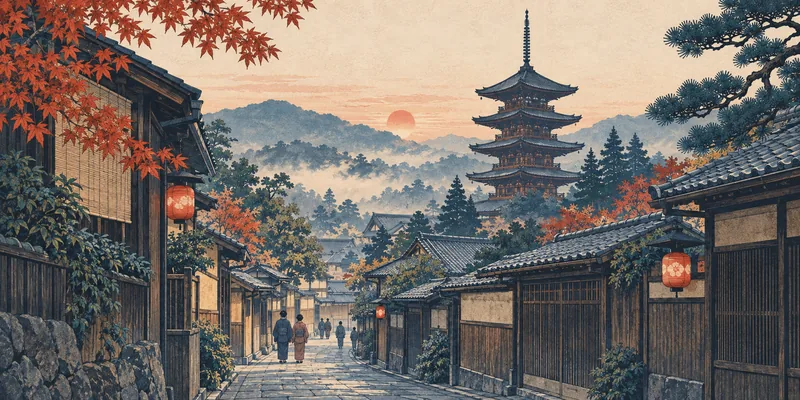
Kyoto rewards a little geographical planning. Pick a base that fits your arrival and evenings, then group nearby sights. You will spend less time crossing the city and have more space for the places you actually enjoy.
Where to stay in Kyoto
Start with the trade-offs rather than a “best hotel” list. These are broad planning areas, not guarantees about individual properties. Check your chosen hotel’s exact address and the walking route from the station.
| Area | Consider it for | Check before booking |
|---|---|---|
| Kyoto Station | Shinkansen arrivals and onward rail journeys | The correct station exit and the final walk with luggage |
| Downtown / Shijo–Kawaramachi | Restaurants, shopping and evening walks | Your connection from Kyoto Station, street noise and room layout |
| Gion / Higashiyama | Historic streets and eastern Kyoto sights | Walking surfaces, steps, taxi access and local access restrictions |
For a family of three, search with the child’s actual age and inspect the exact room category. Confirm the number and size of beds, whether the child shares a bed, bathroom layout, breakfast terms and space for luggage. A general “family-friendly” label is not enough evidence.
Allow for Kyoto’s accommodation tax
For stays from 1 March 2026, Kyoto’s accommodation tax uses revised bands based on the accommodation charge per person per night. Check the official current bands and ask your property whether the tax is included, already collected or payable on arrival. Compare the full stay cost rather than the headline nightly rate.
Use our accommodation checklist to confirm beds, room occupancy and cancellation terms before booking.
A proposed three days in Kyoto
This is an editorial suggestion, not a record of our trip or a claim about your booked itinerary. Opening days, admission arrangements and energy levels should shape the final plan. Avoid booking every hour.
Day 1: eastern Kyoto
Build one day around Higashiyama. Consider Kiyomizu-dera and the surrounding public streets, with time for lunch and a rest. If you continue towards Gion, respect private roads, photography restrictions and residents going about their day. Choose a small number of stops rather than trying to see every temple.
Day 2: western Kyoto
Give Arashiyama its own part of the day rather than treating it as a quick detour between opposite ends of the city. Pick a main sight, a walk and somewhere to eat. Confirm opening hours for any temple or paid attraction you include, and have an indoor alternative for heavy rain.
Day 3: Fushimi Inari and breathing room
Consider Fushimi Inari as the main outing, then keep the remaining time flexible. The climb includes steps; decide how far to go according to mobility, heat and children’s energy. You do not need to complete a long walking route to make the visit worthwhile.
Getting to Kyoto and around the city
Coming from Tokyo? Read our Tokyo-to-Kyoto train guide for the direct Shinkansen options, ticket decisions and luggage rules. Once in Kyoto, compare rail and subway routes with walking or a short taxi connection. Buses can be useful, but allow for crowded services and avoid taking large suitcases onto busy routes.
Use Kyoto’s official transport guidance for arrival options and the city tourism website for current visitor information. Check your hotel’s recommended final approach, particularly when travelling with a pushchair or mobility needs.
Visiting Kyoto with children
- Plan one main outing at a time and leave space for toilets, food and rest.
- Inspect accommodation bed policies using the exact ages of your children.
- Check steps and access arrangements for each sight rather than assuming historic sites are pushchair-friendly.
- Book tours only after checking the minimum age, duration, meeting point and cancellation policy.
- Travel with the snacks, water and essential items you need, while following each venue’s food and drink rules.
A considerate visit
Kyoto is a lived-in city. Stay on public routes, obey signs about photography and private streets, and avoid blocking doorways or roads. Do not follow or photograph geiko or maiko without permission. Kyoto’s responsible-travel guidance explains the local expectations.
Sources and editorial note
Planning guidance checked on 24 September 2026 against Kyoto’s official tourism website, its transport information and responsible-travel guidance. The itinerary is our suggested structure. No hotel inspection, family field test or current attraction price is claimed.