
Where can you watch sumo in Japan?
The six annual Grand Sumo tournaments visit Tokyo in January, May and September; Osaka in March; Nagoya in July; and Fukuoka in November. Tokyo’s famous arena is Ryōgoku Kokugikan. Between tournaments, regional jungyō tours offer another way to see professional wrestlers. Match your travel dates to the official schedule before buying tickets.
Watching sumo can be one of the most memorable afternoons of a Japan trip: a quiet build-up, ceremony, then a sudden clash in the ring. You do not need to understand every rank to enjoy it. Start by choosing the right kind of event, then read our sumo rules and top wrestlers guide before you go.
What is sumo wrestling?
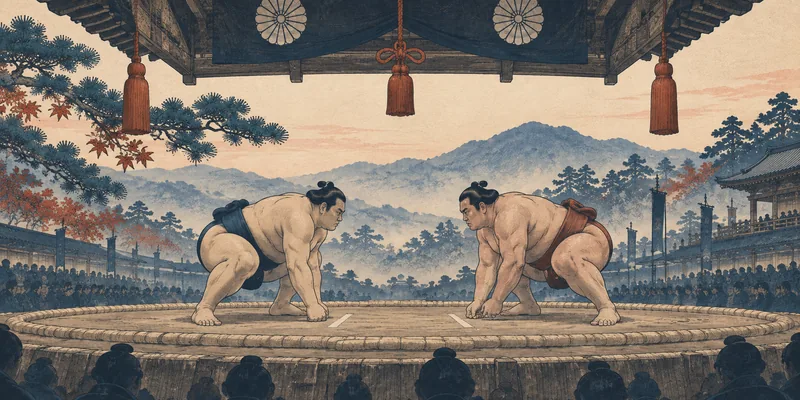
Sumo is Japanese wrestling with a long ceremonial history. Wrestlers, called rikishi, compete in a raised clay ring known as the dohyō. Professional sumo combines short bouts with formal entrances and rituals; the time between contests is part of the experience. For a visitor, the easiest introduction is to watch where each wrestler’s feet are and who controls the centre of the ring. JNTO’s introduction to the spectacle explains the setting.
Sumo tournament locations: Tokyo, Osaka, Nagoya and Fukuoka
| Month | City | Venue |
|---|---|---|
| January | Tokyo | Ryōgoku Kokugikan |
| March | Osaka | EDION Arena Osaka |
| May | Tokyo | Ryōgoku Kokugikan |
| July | Nagoya | IG Arena |
| September | Tokyo | Ryōgoku Kokugikan |
| November | Fukuoka | Fukuoka Kokusai Center |
Each Grand Tournament, or honbasho, lasts 15 days. Kyoto is not a regular honbasho host; Osaka is the March option to consider alongside a Kyoto itinerary. Always verify the exact venue and dates on the Japan Sumo Association calendar.
| City | Dates |
|---|---|
| Tokyo | 10–24 January 2027 |
| Osaka | 14–28 March 2027 |
| Tokyo | 9–23 May 2027 |
| Nagoya | 11–25 July 2027 |
| Tokyo | 12–26 September 2027 |
| Fukuoka | 14–28 November 2027 |
For late-2026 travel, the published Fukuoka tournament dates are 8–22 November 2026. A scheduled event is not a promise that seats remain available. Check the calendar and ticket seller again before committing to accommodation.
Ryōgoku Kokugikan: Tokyo’s famous sumo stadium
The big Tokyo sumo stadium you may have seen on television is Ryōgoku Kokugikan, also written Ryogoku Kokugikan or Kokugikan Sumo Hall. It is in Ryōgoku, in Tokyo’s Sumida district. Its green roof and the tournament flags outside make it a distinctive landmark. The district also has sumo connections beyond the arena, including stables and chanko-nabe restaurants. See GO TOKYO’s Ryōgoku guide.
- Address: 1-3-28 Yokoami, Sumida-ku, Tokyo.
- By JR train: Ryōgoku Station on the Sōbu Line is close to the arena.
- By subway: Ryōgoku Station on the Toei Ōedo Line is a separate station; the official museum directions use exit A4.
- Tournament months: January, May and September. There is not a Grand Tournament every day of the year.
The Sumo Museum is on the arena’s first floor, with changing displays such as ceremonial aprons and historic ranking sheets. It is normally free, but a tournament ticket is required to enter during a Tokyo Grand Tournament. Closures and exhibition changes apply, so check its calendar rather than treating it as a guaranteed walk-in alternative. Museum access does not mean you can watch a bout or wander around the arena.
How to buy sumo tickets in Tokyo and other cities
Start with Ticket Oosumo, the official English ticket service, and the Association’s tournament calendar. Check the sale-opening date for your tournament, then compare days and seat categories. Do not build your trip around an assumption that tickets will be available at the door.
At Kokugikan, compare box seats with arena chair seats. The official seating guide shows the layout. Check whether the price is for a whole box or an individual seat, how many people it accommodates, and whether the seating arrangement suits everyone in your group. For a first visit, our practical preference is a chair if sitting on the floor for a long period would be uncomfortable.
- Choose a tournament that overlaps your actual itinerary.
- Check the date, seat category, total price and any booking fees.
- Read the ticket collection or delivery instructions before paying.
- Check child admission, accessibility and cancellation conditions for that event.
- Save the confirmation and arrival instructions somewhere available offline.
If you compare a guided package, check exactly what it includes: a tournament ticket, guide, meal, transport or a separate entertainment show. A product labelled “sumo experience” is not necessarily entry to a Grand Tournament. Use our yen converter to estimate your budget; the seller’s final charge is what matters.
Where does sumo tour? Understanding jungyō
Jungyō are the Japan Sumo Association’s regional tours between the major tournaments. The typical tour periods are April, August, October and December, with some dates extending into neighbouring months. A day can include training, demonstrations, ring-entering ceremonies and bouts. It is a different programme from a ranking tournament: choose it for the event itself, not because you expect a honbasho championship day. The Association’s day-at-jungyō guide explains the format.
Tour stops change rather than following one permanent route. For example, the official 2026 autumn schedule includes Ebina on 7 October, Matsumoto on 10 October, Kanazawa on 12 October and Takayama on 14 October. These are dated examples, not annual promises. Use the official tour schedule and the linked local organiser to confirm the venue, tickets and programme for your travel year.
A tour stop may fit a regional trip better than travelling back to Tokyo. First check how far the venue is from your accommodation, the event’s finish time and your return transport. A familiar city name on a tour list does not guarantee a venue beside its main station.
Can you see sumo when there is no tournament?
Yes, but decide what you want to experience. A regional tour offers an official touring programme. A permitted stable visit lets you observe training under the stable’s rules. A visitor show may offer explanations and demonstrations by former wrestlers. These are different experiences and should be described honestly when sold.
Do not turn up at a stable expecting entry. Confirm that visits are permitted, book through an authorised arrangement when required, and follow instructions on arrival, silence and photography. For a quieter sumo-themed outing, pair the museum—if open—with a walk around Ryōgoku. Our Tokyo travel guide helps you fit the area into a city itinerary.
Plan your first day watching sumo
Our suggestion is to leave the day fairly open. Check the event’s timetable, allow time to find your entrance and seat, and avoid scheduling a distant attraction immediately after it. Lower-division bouts and top-division ceremonies happen at different stages of a tournament day; the time printed for doors opening is not the same as the start of the headline bouts.
Before leaving your hotel, save your ticket instructions, station route and one or two wrestler names. Bring only what you need and check the venue’s current bag and food rules. If travelling with children, choose seats for comfort as well as proximity to the ring, and plan how you will handle a long afternoon. Read the rules and wrestlers guide together so everyone has something to look for.
Questions about watching sumo in Japan
What is the big sumo stadium in Tokyo called?
Ryōgoku Kokugikan, in Sumida. It hosts the January, May and September Grand Tournaments.
Can I watch a sumo tournament in Kyoto?
Kyoto is not one of the six regular Grand Tournament stops. Check Osaka in March or the changing regional tour schedule for another event that fits your dates.
Is sumo on every day in Tokyo?
No. Check the tournament and event calendars before booking a sumo day. The arena is not a daily wrestling attraction.
Do I need to understand Japanese?
You can follow the action without fluent Japanese. Learn the basic win conditions and keep the event information and a few wrestler names handy.
Sources and planning note
Official calendars, ticket information, museum details and tourism sources linked above were checked on 24 September 2026. Dates and venues can change; recheck before booking. Seat preferences and itinerary suggestions are our editorial advice, not a firsthand venue review. Ticket links here lead to official information and do not imply availability or an affiliate partnership.